01 动机Motivation
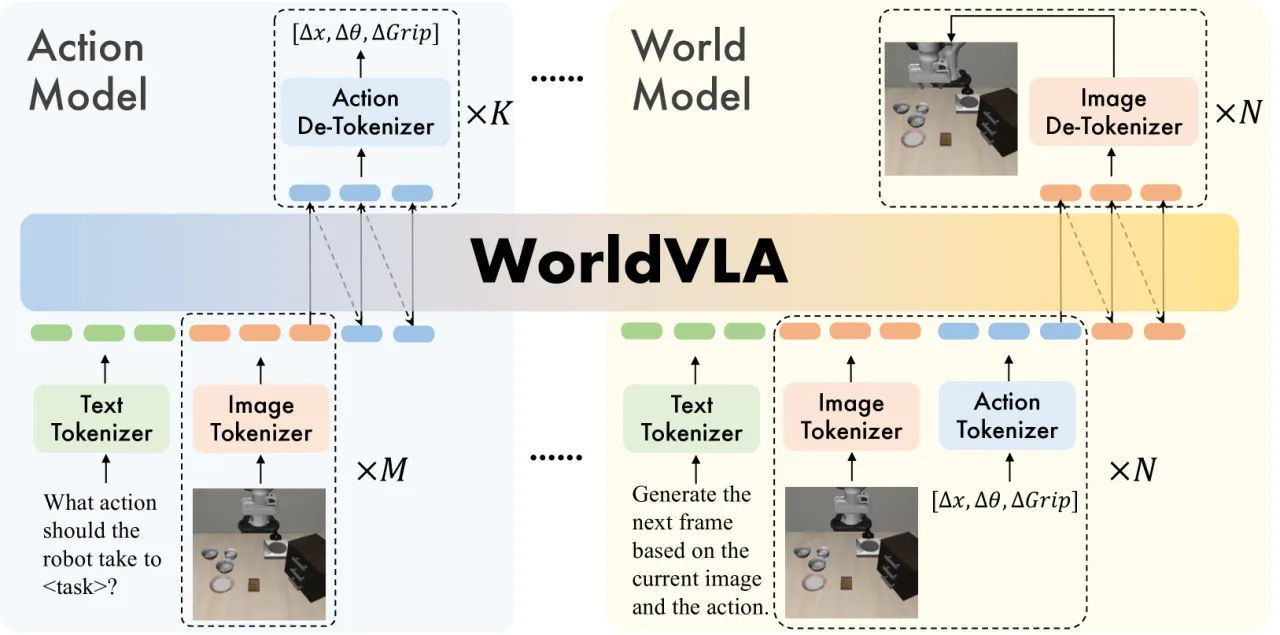
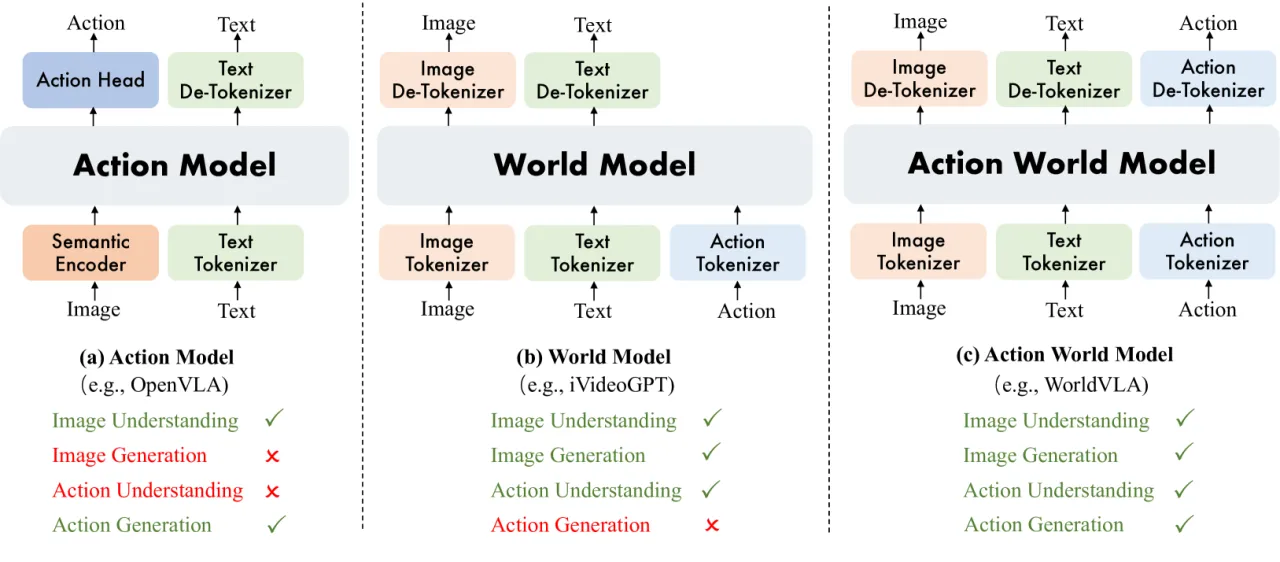
当前机器人学习中,动作模型(VLA)与世界模型被视为两个相互独立的范式:VLA 从图像和文本预测动作,世界模型从图像和动作预测未来帧。这两者的能力存在天然互补性,但此前没有工作将它们真正统一在同一框架中并验证相互增益。In current robot learning, the action model (VLA) and the world model are treated as two mutually independent paradigms: the VLA predicts actions from images and text, while the world model predicts future frames from images and actions. Their capabilities are naturally complementary, yet no prior work had truly unified them within one framework and verified the mutual gains.
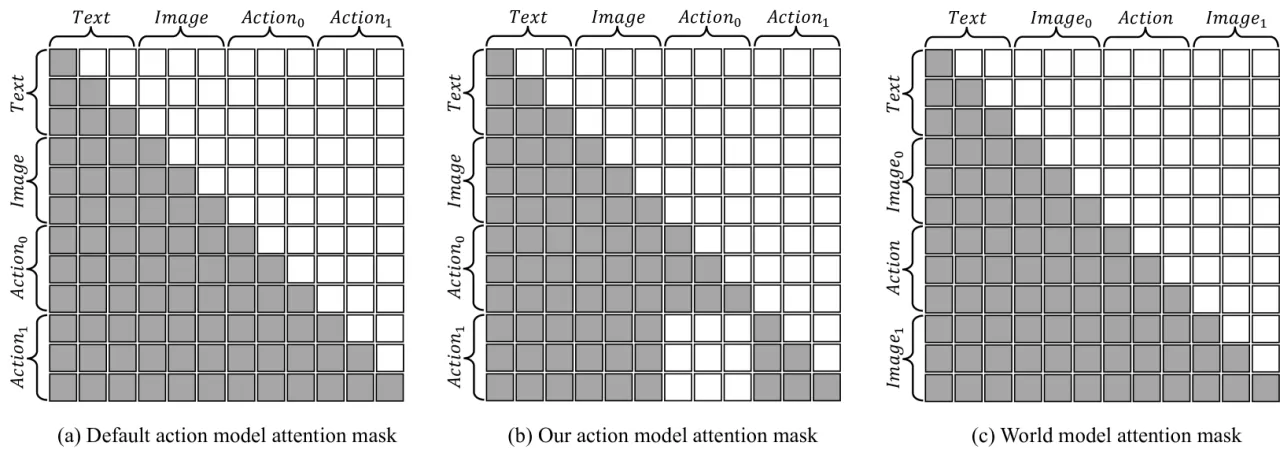
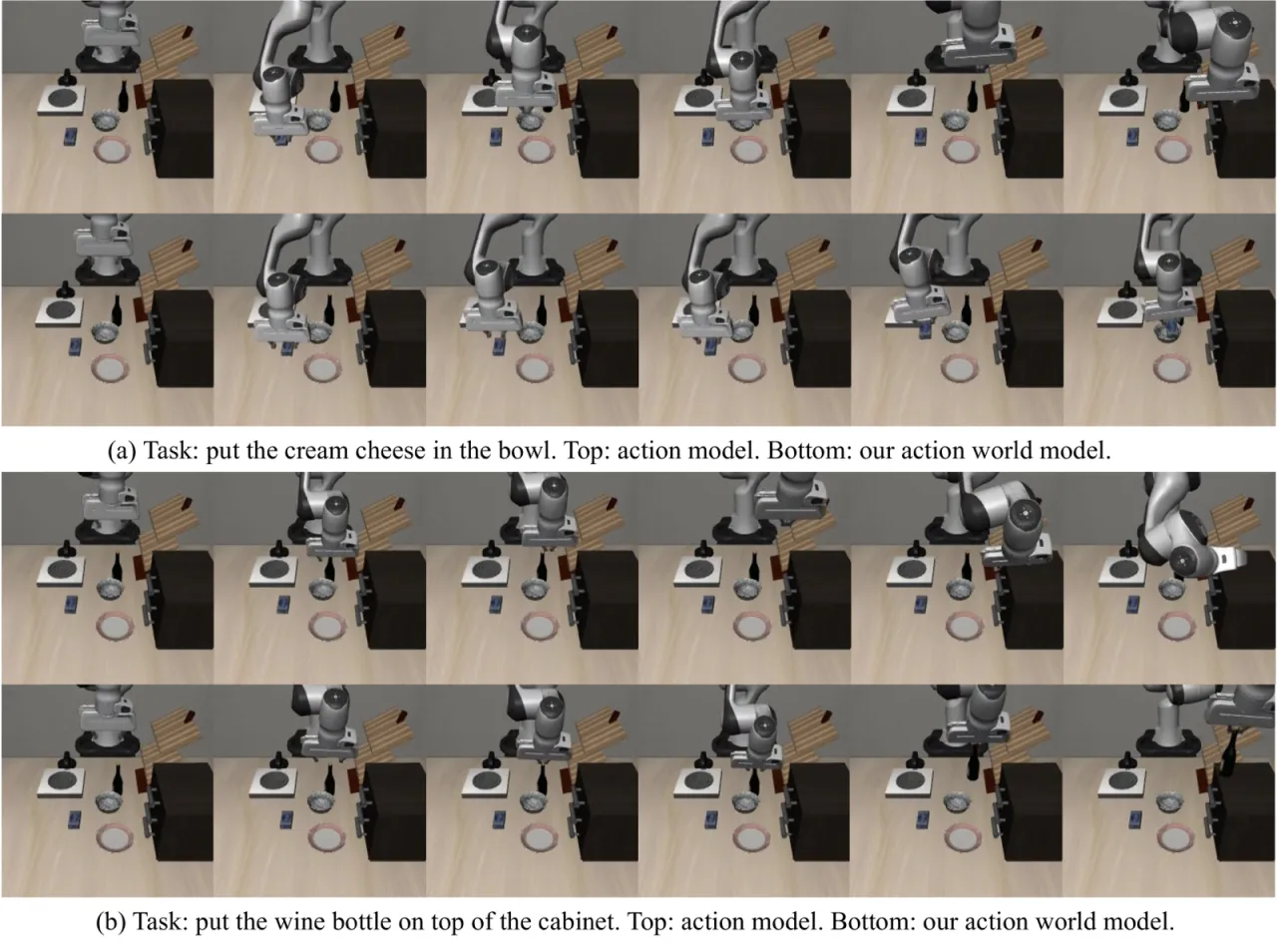
"We integrate action model and world model into a unified framework, demonstrate that action and image generation mutually enhance each other, and propose an attention mask strategy that selectively masks prior actions during the generation of the current action."
LIBERO 平均 SRWorldVLA 512×512
LIBERO average SR
LIBERO 平均 SROpenVLA baseline
LIBERO average SR
vs. 纯世界模型(50 帧)FVD improvement
vs. world model only (50 frames)
vs. 同骨干动作模型Grasping success rate gain
vs. same-backbone action model
核心问题:动作块生成中的误差累积Core Problem: Error Accumulation in Action Chunk Generation
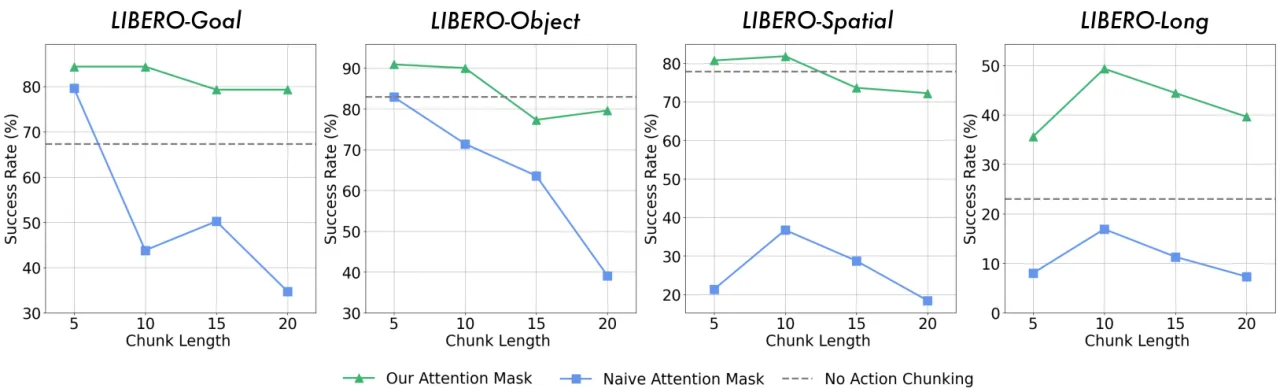
在自回归生成多步动作块(action chunk)时,每一步动作都依赖前一步的输出。若前一步出现误差,后续动作会受到污染,导致整体性能显著下降。实验表明,在不加干预的情况下加入 action chunking 会导致成功率下降 10–50 个百分点。When multi-step action chunks are generated autoregressively, every action depends on the output of the previous step. If the previous step is erroneous, the subsequent actions are contaminated, causing a marked drop in overall performance. Experiments show that adding action chunking without any intervention lowers the success rate by 10–50 percentage points.